
What is cataract?
Cataract is the clouding of the natural lens inside the eye. As the lens loses transparency, vision may become blurred, dimmer or more sensitive to glare.

Cataract may reduce sharpness, contrast and color perception.

At night, glare from headlights and bright lights may become more noticeable.
Symptoms that deserve evaluation
- Blurred, cloudy or faded vision
- Increased glare, especially when driving at night
- Need for stronger lighting to read
- Frequent changes in glasses prescription
- Temporary improvement in near vision in some cases
When should cataract be operated?
There is no single cataract grade that automatically requires surgery. The indication is based on how much cataract affects daily life and whether surgery is expected to improve visual function safely.
How surgery works
Modern cataract surgery removes the cloudy natural lens and replaces it with an intraocular lens. The procedure is usually performed under local anesthesia, with postoperative drops and follow-up visits.
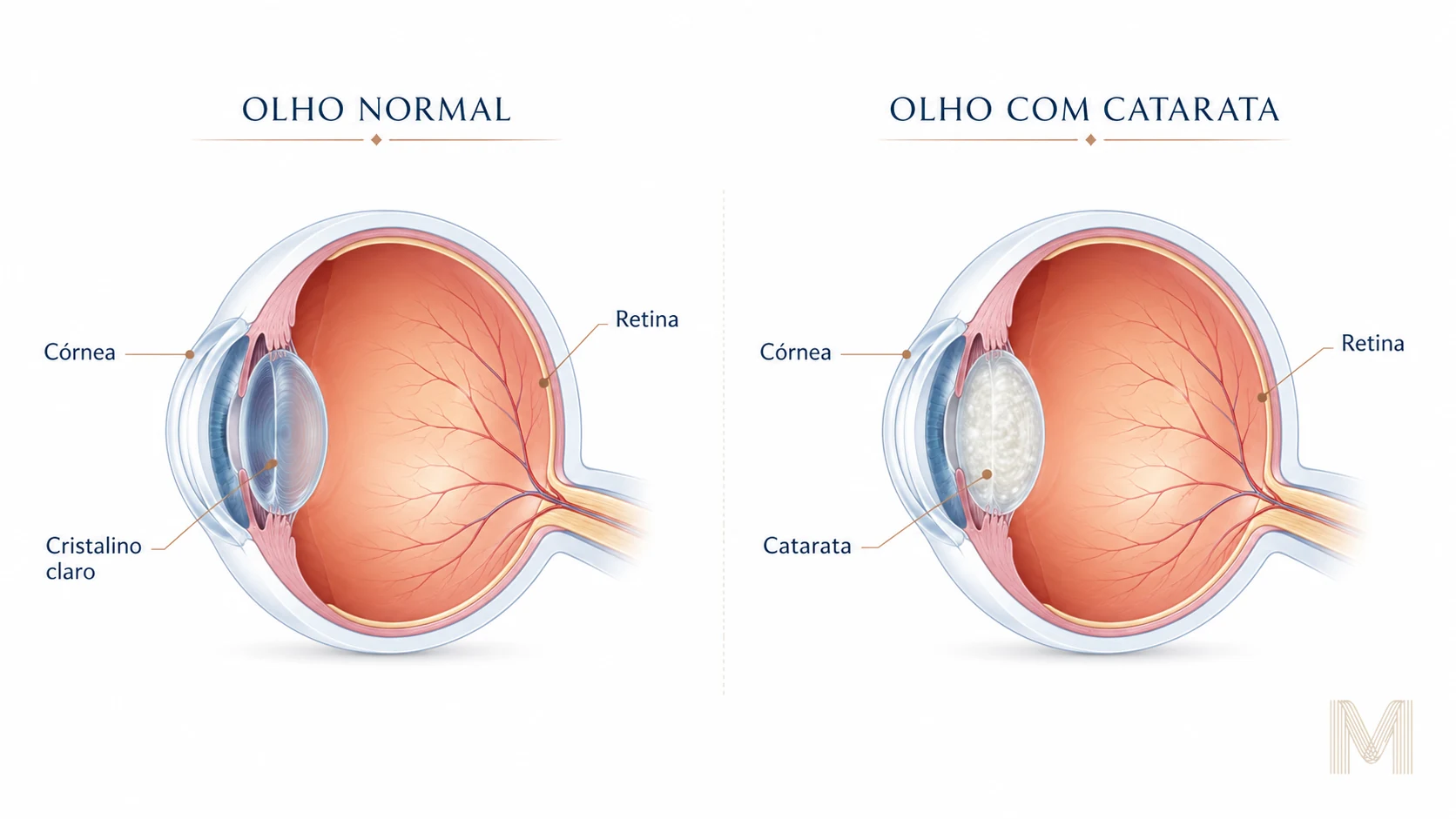
Normal crystalline lens compared with a cloudy lens.
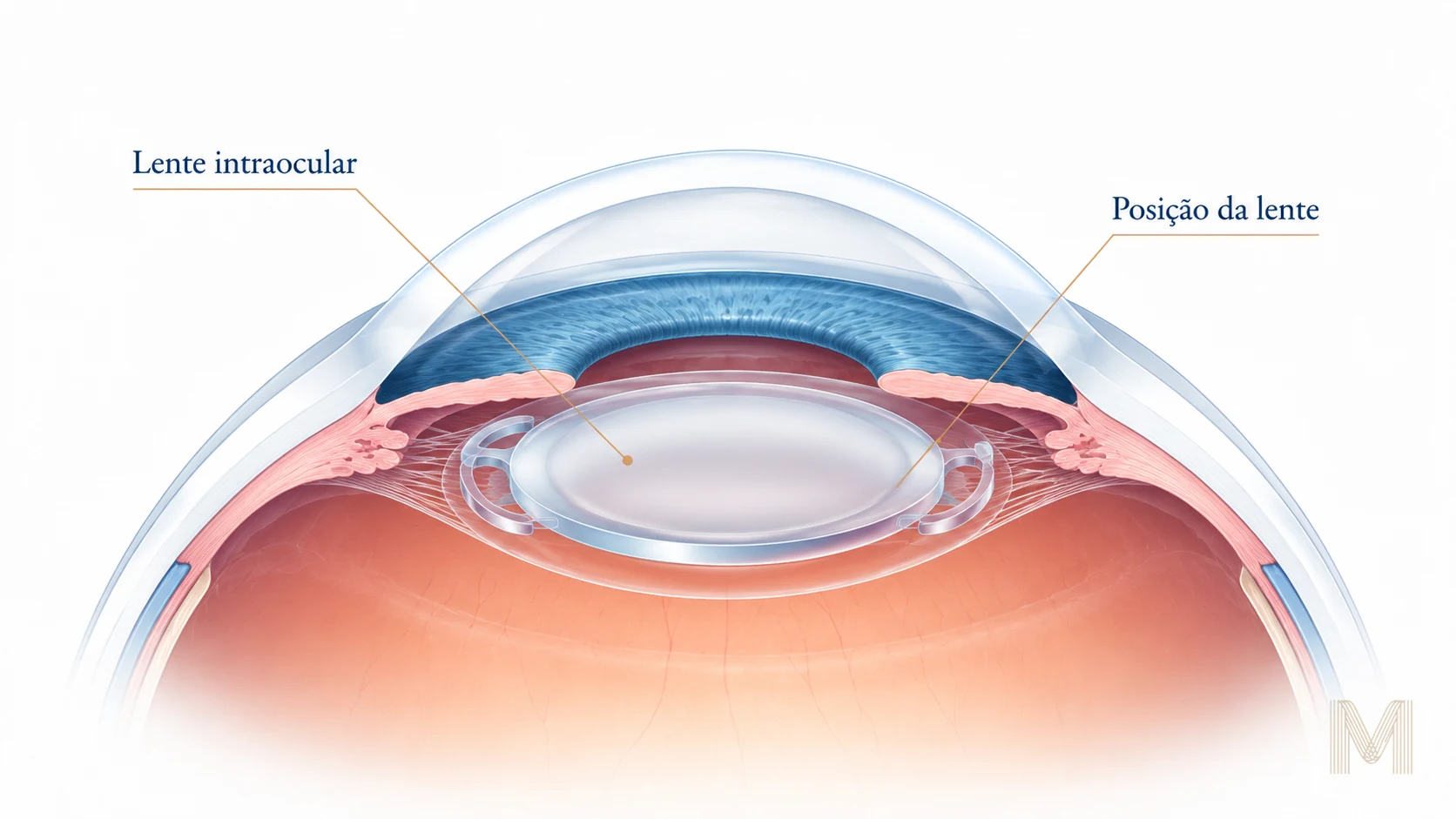
The intraocular lens replaces the cloudy natural lens.
Intraocular lenses
Lens choice is part of the surgical plan. Monofocal, toric, EDOF and multifocal lenses have different goals and tradeoffs. The best choice depends on anatomy, retina, cornea, lifestyle and expectations.
Learn more about cataract lens types and how selection is made.
Recovery and risks
Most patients resume light activities progressively, but recovery varies. Cataract surgery is highly standardized, but no surgery is risk-free. Infection, inflammation, retinal problems, pressure changes and refractive surprises are uncommon but relevant possibilities.
When to seek evaluation
Schedule an evaluation if vision is interfering with reading, driving, work, hobbies or safety. Examination is the only way to confirm whether cataract is the main cause.
The cataract surgery journey
Four stages, from planning to follow-up.
Consultation
A conversation about symptoms, routine and goals. The ophthalmologist evaluates the cataract and explains the options.
Tests
Eye measurements help plan the surgery and the choice of intraocular lens.
Surgery
The cloudy natural lens is replaced with an intraocular lens, following the medical plan.
Recovery
Use the eye drops as directed, avoid rubbing your eyes and attend your follow-up visits.
Every case is individual. Instructions and recovery time may vary.
Quick questions
When is cataract surgery considered?
Surgery may be considered when cataract affects reading, driving, work or safety, and when the exam suggests the expected benefit justifies the risks.
Does the intraocular lens replace the natural lens?
Yes. The cloudy natural lens is removed and replaced with an intraocular lens calculated for that eye.
Is recovery the same for everyone?
No. Recovery depends on eye health, surgical details, lens choice, other conditions and postoperative care.
Schedule an evaluation with Dr. Marcelo at Scopo
The Scopo team will guide appointment availability and scheduling.