
What is refractive surgery?
Refractive surgery aims to reduce dependence on glasses or contact lenses by correcting myopia, astigmatism, hyperopia or presbyopia in selected patients.
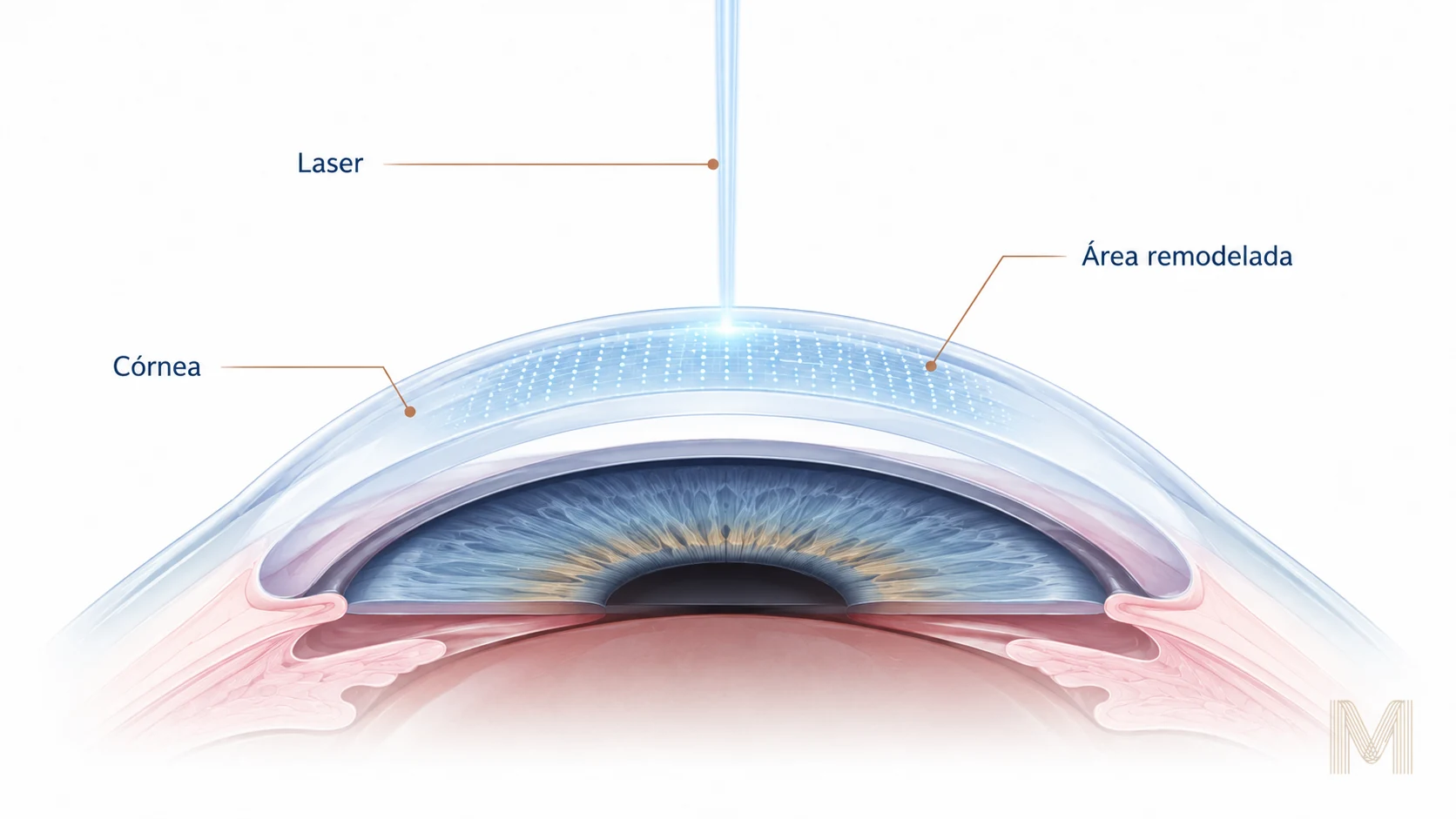
The laser changes corneal curvature to help focus light more accurately.
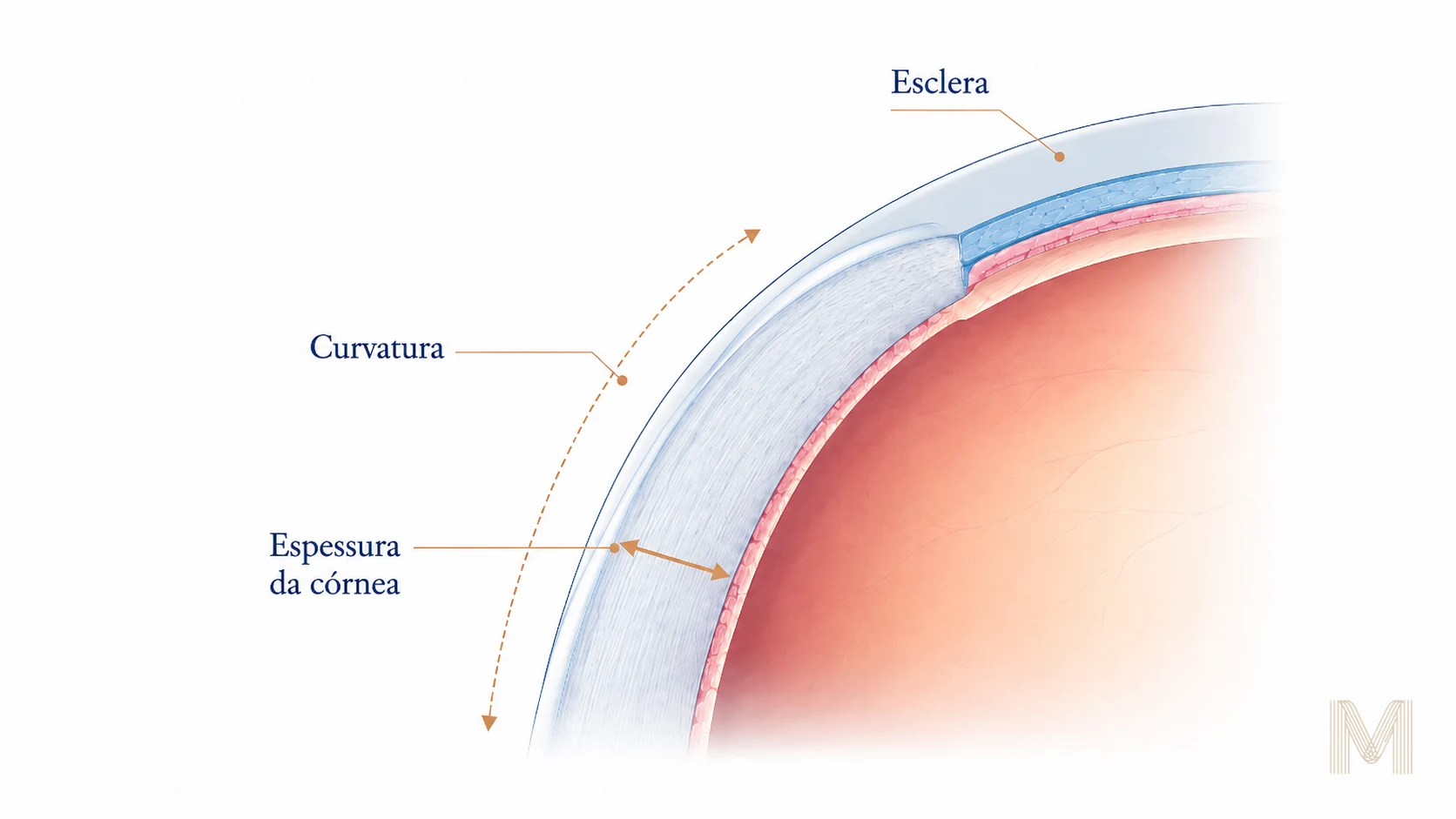
Corneal thickness, curvature and regularity are central to surgical planning.
Treatable refractive errors
- Myopia: distance vision is blurred.
- Hyperopia: near and sometimes distance vision may require effort.
- Astigmatism: vision may be distorted at different distances.
- Presbyopia: age-related difficulty focusing up close.
Presbyopia, Presbyond® and glasses independence
Presbyopia treatment must consider near, intermediate and distance vision. In selected patients, strategies such as Presbyond®, the Alcon READ solution, planned monovision, PRK, LASIK, phakic lenses or intraocular lenses may be discussed to reduce glasses dependence.
Read article: Presbyond® and presbyopia treatment →
PRK
In PRK, the laser is applied on the corneal surface after removing the epithelium. Recovery tends to be slower in the first days, but it can be a good option for selected corneas.
LASIK
In LASIK, a corneal flap is created and the laser is applied underneath. Visual recovery is often faster, but not every cornea is suitable.

Preoperative evaluation
Topography, tomography, pachymetry, ocular surface evaluation and retinal assessment help define whether surgery is safe and which technique is appropriate.
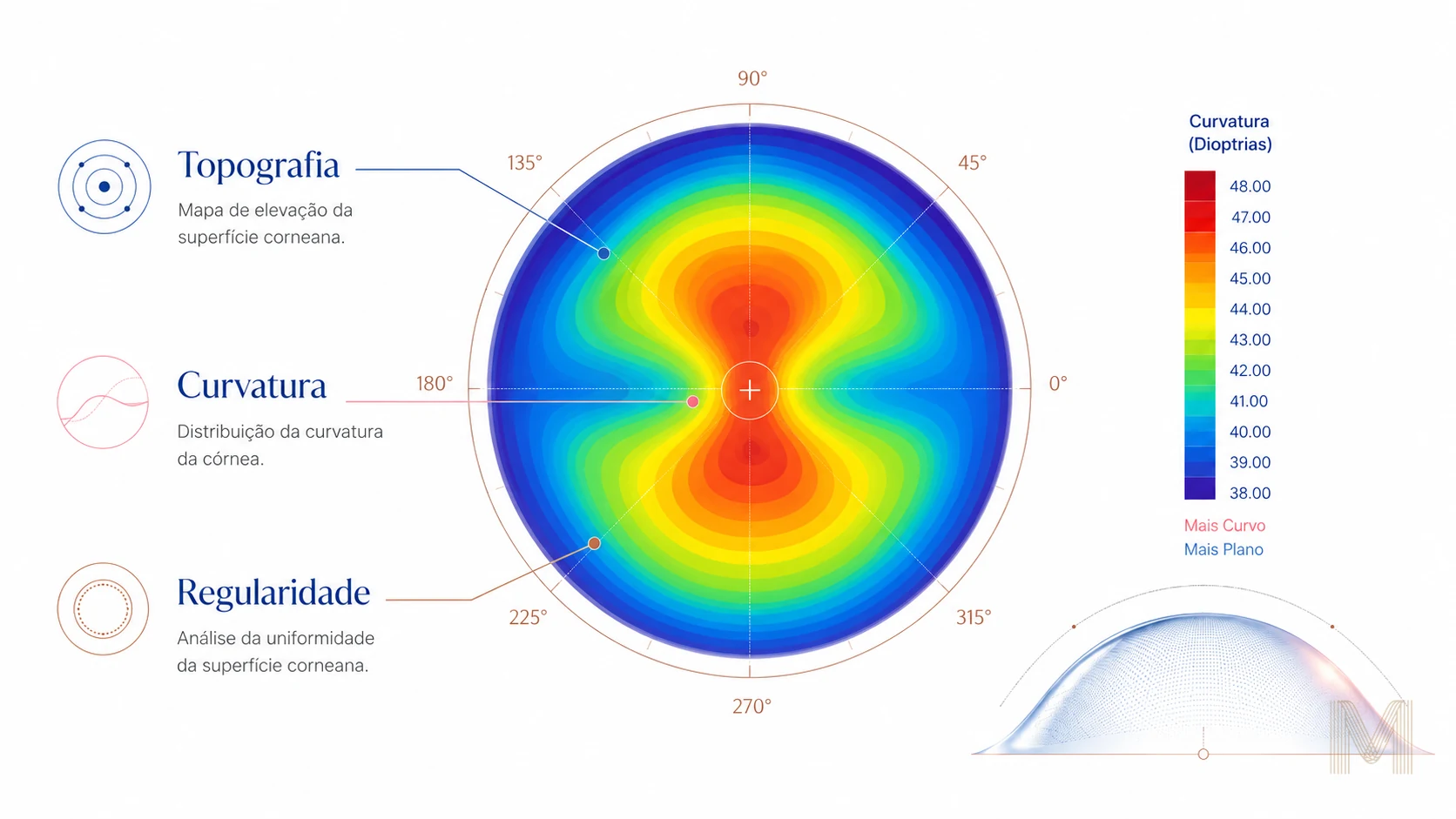
Topography and tomography help identify corneal shape and risk patterns.
Read article: am I a candidate for refractive surgery? →
Contraindications
Suspicious or irregular corneas, unstable prescription, uncontrolled dry eye, certain retinal or systemic conditions and unrealistic expectations may contraindicate surgery or point to alternatives.
Alternatives
Some patients who are not ideal candidates for PRK or LASIK may be considered for phakic lenses, depending on anatomy and safety criteria.
Realistic expectations
The goal is to reduce dependence on glasses and, in selected cases, improve glasses independence. It is not a promise of perfect vision or zero future need for optical correction.
Quick questions
Who may be a candidate for refractive surgery?
Patients with stable prescription, suitable cornea, controlled ocular surface and realistic expectations may be candidates, but confirmation depends on testing.
PRK or LASIK: which is better?
There is no universal best technique. Choice depends on corneal thickness, curvature, regularity, prescription, dry eye and safety criteria.
Does refractive surgery correct presbyopia?
In selected cases, strategies such as Presbyond®, the Alcon READ solution, planned monovision or intraocular lenses may be discussed to reduce glasses dependence for near and intermediate vision. Indication depends on testing and is not a promise of total glasses independence.
Find out whether refractive surgery is appropriate
A responsible indication depends on examination and discussion of risks, benefits and alternatives.